Early strength coaching leaned heavily on ratios for a reason: they work extremely well when performance is the target and training history is deep. But once symptoms, irritability, and limited training exposure enter the picture, ratios on their own can become misleading, and sometimes even counterproductive, because they push coaches toward narrow conclusions without enough context.
This article explains where Structural Balance shines, where it benefits from added context, and how CSES layers in a Medical Exercise Science lens so coaches can make better decisions without abandoning performance logic.
In the early days of Olympic weightlifting, coaches noticed something practical:
Improving specific positions often improved the competition lifts.
The Origin
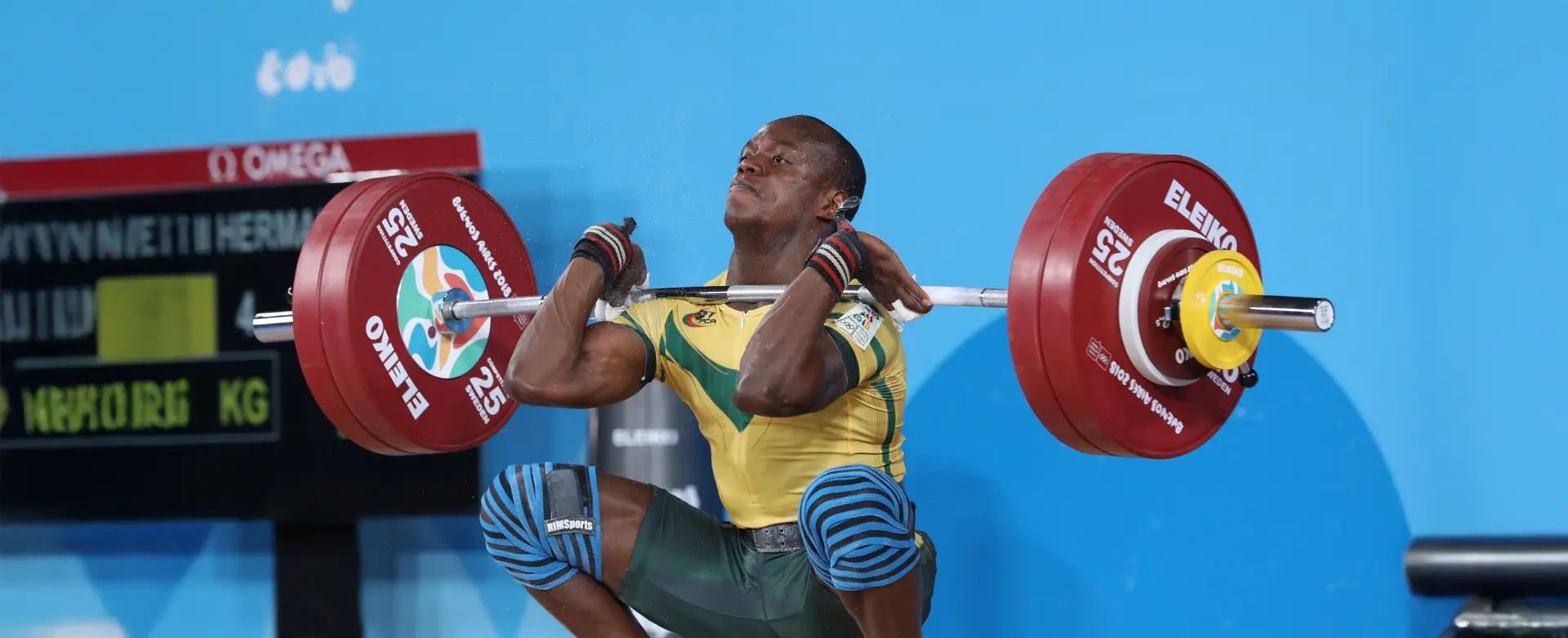
The receiving position of the clean closely resembles the bottom of a front squat. When athletes improved their front squat numbers, clean performance often improved as well.
From there, coaches began using benchmark ratios between the competition lifts and key assistance lifts. These ratios were never meant to be perfect rules. They were practical reference points that helped highlight deficits and guide training priorities.
Within weightlifting literature and coaching traditions, this way of thinking expanded beyond strength numbers and into the physiology that helps explain why certain relationships matter. For example, the balance between hamstring and quadriceps contribution can influence knee control and an athlete’s ability to hold position as force and speed increase.
The Strength of Ratios
Charles Poliquin later helped popularize this style of thinking within broader strength coaching by formalizing Structural Balance into a coach-friendly framework.
In that era, it gave coaches a way to compare key lifts, identify weak links, and design programs around bringing up what appeared to be holding performance back.
That contribution matters. Structural Balance pushed coaches toward a performance mindset built on assessment and priorities rather than random exercise selection.

Image: “Alessio Pavone deadlift European Championship 2022”
by FactNoter, Wikimedia Commons, CC BY-SA 4.0
Where Ratios Need Context
Over time, Structural Balance concepts were carried into general strength coaching, including non-weightlifting and non-athletic populations. In these settings, coaches often applied ratios and asymmetry patterns to guide exercise selection, and in some cases to explain discomfort, pain, or recurring injuries.
A common example is the shoulder. Shoulder pain is sometimes reduced to a single explanation such as “weak rotator cuff,” supported by a target external rotation benchmark. These reference points can help guide programming, but they can also narrow exercise selection too quickly when the limiting factor is not only strength.
The issue is not that benchmarks are inaccurate or useless. Poliquin helped formalize many of these ratios after studying what showed up consistently in high-level performers, and weightlifting traditions had already been shaped by decades of observing the output of world-class Olympic athletes. So the issue is not the reference point itself. The issue is applying these benchmarks as if they explain symptoms, instead of treating them as one input inside a bigger decision. This limitation shows up most clearly in general population clients, but it can also show up in elite sport. The moment an athlete is dealing with injury history, post-surgical changes, pain, or a major shift in training exposure, the same ratio can mean something different. In those cases, a benchmark may still be informative, but it cannot be treated as diagnosis. It has to be framed against joint mechanics, symptom behavior, irritability, and the current constraints shaping how the athlete moves and tolerates load.
Ratios are an excellent reference.
Where Ratios Need Context
Over time, Structural Balance concepts were carried into general strength coaching, including non-weightlifting and non-athletic populations. In these settings, coaches often applied ratios and asymmetry patterns to guide exercise selection, and in some cases to explain discomfort, pain, or recurring injuries.
A common example is the shoulder. Shoulder pain is sometimes reduced to a single explanation such as “weak rotator cuff,” supported by a target external rotation benchmark. These reference points can help guide programming, but they can also narrow exercise selection too quickly when the limiting factor is not only strength.
The issue is not that benchmarks are inaccurate or useless. Poliquin helped formalize many of these ratios after studying what showed up consistently in high-level performers, and weightlifting traditions had already been shaped by decades of observing the output of world-class Olympic athletes. So the issue is not the reference point itself. The issue is applying these benchmarks as if they explain symptoms, instead of treating them as one input inside a bigger decision. This limitation shows up most clearly in general population clients, but it can also show up in elite sport. The moment an athlete is dealing with injury history, post-surgical changes, pain, or a major shift in training exposure, the same ratio can mean something different. In those cases, a benchmark may still be informative, but it cannot be treated as diagnosis. It has to be framed against joint mechanics, symptom behavior, irritability, and the current constraints shaping how the athlete moves and tolerates load.
Ratios are an excellent reference.
They can highlight likely performance bottlenecks and help you set training priorities. But they are not a diagnosis, and they do not explain symptoms on their own.
Ratios can suggest what might be missing. Outside performance contexts, they should be treated as a reference point, not a conclusion. When symptoms, irritability, or limited training exposure enter the picture, ratios on their own can become misleading, and sometimes even counterproductive, because they push coaches toward narrow conclusions without enough context.

The CSES Upgrade
CSES acknowledges the contribution and the performance-oriented logic that Structural Balance introduced. We also recognize that many coaching situations require an added lens.
In the general population and in injured athletes, ratios and lift comparisons often do not capture the full limiter on their own. Many non-athletes do not have the baseline movement capacity or exposure history for strength ratios to be interpreted the same way they are in sport. When training history is limited, the relationship between lifts may reflect general exposure, coordination, confidence under load, and tolerance to training stress as much as it reflects a specific weak link.
This is why applying sport-style ratios to non-athletes, or to athletes dealing with injury or post-surgical changes, can lead to premature conclusions. The coach may be correct that a benchmark is low, but incorrect about what that benchmark means in that context.
For that reason, CSES expands the framework by shifting the primary focus from comparing lifts to identifying constraints and context.
Joint mechanics and neuromuscular physiology help shape that decision-making, but the model is not built around one ratio or one test. It is built around a more complete picture using objective markers such as mobility, stability, and strength levels, alongside subjective factors such as symptom behavior, irritability, training history, and injury context.
The question changes from:
“What number is low?”
to:
“What is constraining this person’s ability to express force, control position, and tolerate stress?”
Ratios can suggest what might be missing. Outside performance contexts, they should be treated as a reference point, not a conclusion. When symptoms, irritability, or limited training exposure enter the picture, ratios on their own can become misleading, and sometimes even counterproductive, because they push coaches toward narrow conclusions without enough context.
What We Measure Now
Constraints can be objective, subjective, or a blend of both.
Objective markers include measurable qualities such as mobility, stability, strength levels, and the ability to hold or access key positions under load.
Subjective factors include symptom behavior, irritability, training history, injury context, and how the person responds to stressors inside and outside the gym.
CSES treats both as real variables because they change what the correct training decision looks like.
Ratios stay valuable when the person has the exposure, the skill, and the tolerance for the training plan required to change them. In other contexts, ratios can still inform the coach, but they need to be framed properly, so they guide priorities without falsely explaining the full situation.
Takeaway
Structural Balance gave coaches a useful performance framework: compare key lifts, identify deficits, and bring up what seems to be holding performance back.
CSES keeps that performance logic, but adds a Medical Exercise Science lens so ratios remain a reference point rather than the driver when symptoms and context change the coaching decision. The goal is simple: use ratios in the right people, at the right time, for the right reason, without abandoning performance logic.
Learn the mechanics behind the model?
Our Musculoskeletal Anatomy & Kinesiology course is the foundation for CSES Medical Exercise Science curriculum. We teach anatomy and kinesiology as a decision-making tool: how to interpret what you see, choose the right intervention, and progress without guessing. Join the waitlist for first access to enrollment, dates, and early-bird options.